
Surgical Procedures Cataracts
Our Surgical Procedures: Cataract Evaluations
What is a Cataract?
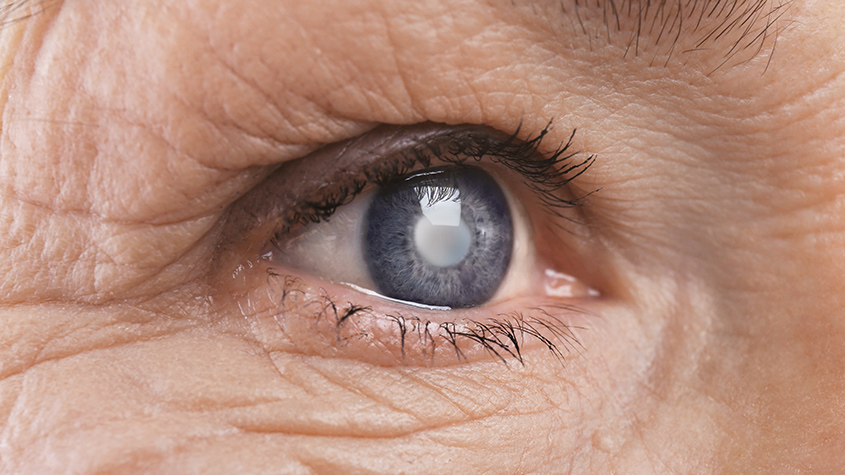
Cataracts are the clouding of the eye’s clear lens which leads to blurry vision, like a window that is fogged with steam. When the lens becomes cloudy, light rays cannot pass through it easily and vision becomes blurry. Cataracts are not a growth or a film over the eye. Initially a cataract hardly affects vision and does not need surgery. As the cataract becomes denser, affects vision, and interferes with activities of daily living, it can usually be removed with surgery to restore clear useful vision.
Undergoing a Cataract Evaluation
As you age, it is normal for parts of your body to start to develop issues. A cataract is a common sign of aging, and about half of Americans over the age of 80 have had cataracts. At South Hills Eye Associates, Ltd., a simple cataract evaluation helps guard against common eye health concerns. A cataract evaluation will help us determine the options you need to maintain good vision. Schedule an appointment at our practice today by calling 412-561-1964 or 724-745-6258
Cataracts May Cause
Cataract Symptoms may include:
Painless blurring of vision, either distance, near, or both
Difficulty focusing
Sensitivity to light and glare
Double vision in one eye
Poor night vision
Fading or yellowing of colors
- Frequent changes in glasses or contact lens prescriptions
Other Causes
Although cataracts usually develop as part of the aging process (more than half of all Americans develop cataracts by age 80), they can also result from:
Eye Injuries
Certain diseases, such as diabetes
Genetic inheritance
Certain medications
Frequent, unprotected exposure to UV-A and UV-B rays
Smoking
The Facts About Cataracts
New advances and techniques have made cataract surgery one of the most successful and life-improving surgical procedures.
After surgery, vision is improved in most patients
Cataract surgery is the most frequently performed surgical procedure in the United States, with more than 1.6 million procedures performed each year
Cataract surgery is usually covered by medical insurance, including Medicare
Cataract surgery is usually done as an outpatient procedure under local anesthesia. In this procedure, the ophthalmologist makes a tiny incision through which he or she removes the cloudy lens and replaces it with a permanent artificial lens.
New IOLs (intraocular lenses) are continually being developed to aid in vision correction following cataract surgery.
If you have cataracts and glaucoma, sometimes a tiny titanium drainage device can be implanted inside the eye at the time of cataract surgery to aid in eye pressure control.
Currently, there are no medications or exercises that will cause cataracts to disappear. Contrary to popular belief, cataracts are not removed using lasers, though in some cases lasers can assist. If cataracts don’t interfere with your life, you may decide not to do anything about them.
Types of Intraocular Lens Implants (IOLs)
Typically during cataract surgery, an artificial lens implant (IOL) is inserted into the eye to restore clear useful vision.
Measurements of the eye are done preoperatively in the office to determine the power of the IOL.
With the variety of lenses currently available, patients can experience refractive cataract surgery and target for a desired refractive outcome.
Monofocal IOL
A Monofocal IOL is designed to give the clearest vision at one place: either distance, near, or intermediate. Usually the patient would at least need glasses for the other visual tasks, such as wearing reading glasses or computer glasses if the implant corrects the distance vision.
If there is a significant amount of astigmatism in the patients eyes, they will need glasses for best correction of their vision in all aspects of their vision. Some patients request monovision. However, monovision is not recommended in patients who have never tried it. The change in depth perception is difficult to get used to if the patient is not aware of what it will be like.
Some people may notice a mild decrease in depth perception with the Monovision option since there is not one distance where both eyes are in equal focus, but eyeglasses may be used as desired to provide good focus in each eye at all distances.
Also, the alternative variation Mini-monovison (also known as blended vison) can be targeted where there is only a small difference between the eyes. This helps with mid-range and larger print, but low power reading eyeglasses would still be needed for smaller print and prolonged reading.
Multifocal IOL
A Multifocal IOL can give clear vision over a variety of ranges from near to distance. Many patients will not need glasses, or will be much less dependent on glasses, when Multifocal IOLs are utilized. For the best results, usually a Multifocal IOL must be placed in each eye. Not all patients are good candidates for such an IOL however, and during the exam your eye doctor can determine suitability of the Multifocal IOLs. Also, there are some relative visual limitations to these lenses in certain lighting conditions.
Toric IOLs
Toric IOLs are specialized IOLs that are made to correct astigmatism. This lens implant can reduce or eliminate visual aberrations that astigmatism causes and so may result in clearer postoperative vision in patients with pre-existing corneal astigmatism.
Another, somewhat less predictable, method of correcting astigmatism, Corneal or Limbal Relaxing Incisions (or Astigmatic Keratotomy), can also be utilized to reduce or eliminate astigmatism at the time of cataract surgery. Cataract Surgery can also correct astigmatism. These procedures also are not covered by insurance benefits. Our ophthalmologists can help you to decide what would be the best procedure for you.
Advanced Presbyopia Correcting IOLs
There are advanced presbyopia-correcting intraocular lenses (IOLs) designed to provide a continuous range of vision, helping patients see clearly at distance and intermediate ranges, with functional near vision. Their innovative optical design aims to deliver smooth visual transitions while minimizing visual disturbances such as halos and glare.
Quick Links
Helpful Articles
All Eye Care Services
At South Hills Eye Associates, Ltd., our services help you guard against common health concerns. From a cataract evaluation to a glaucoma test, we are happy to provide the options you need to maintain good vision.
Keep In Touch
For non-urgent questions or to learn more about our services, contact us today!
© 2026 South Hills Eye Associates, Ltd.. All rights Reserved - Accessibility Statement - Privacy Policy - Sitemap
Managed and Designed by 